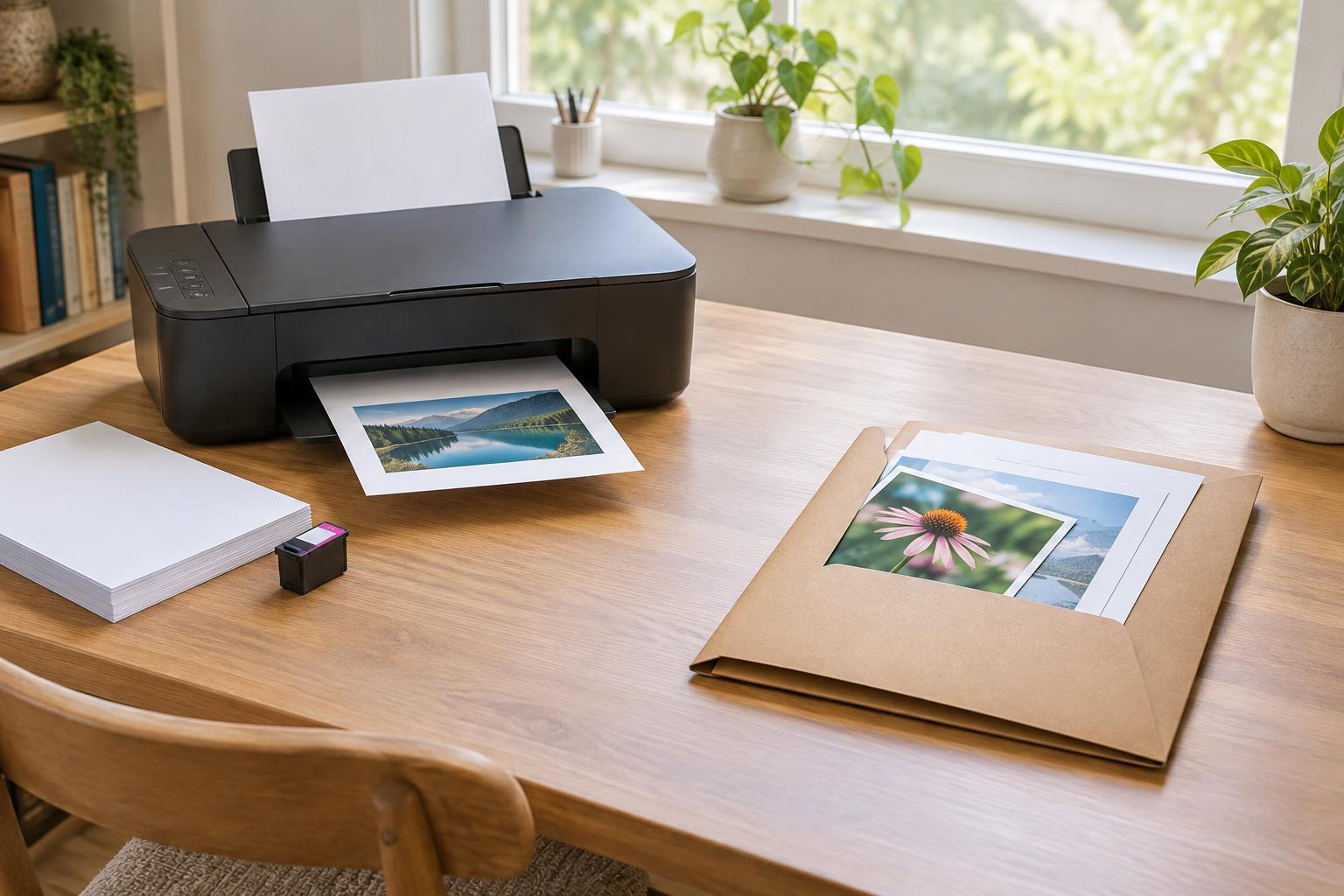
Start with what you actually print
The cheapest way to print depends less on the printer’s price tag than on your routine. Before shopping, look at the documents you have printed recently or expect to print over the next few months. Count ordinary black-and-white pages separately from color pages, photographs, labels and other specialty jobs. Also note whether you tend to print one page at a time or gather several jobs into a batch.
A household that occasionally needs a shipping label or a signed form may be well served by a nearby print shop. Someone who regularly prints worksheets, recipes or drafts might get more value from a home machine. Frequency matters, but so does urgency: a printer at home can be worth paying for if you often need a document when the shop is closed.
Compare total costs, not just the price per page
For a home printer, add the purchase price to the expected cost of ink or toner and paper. Allow for replacement supplies even if you print very little: ink can require attention after long idle periods, while any printer may eventually need maintenance or replacement. Look at the prices of compatible replacement cartridges or refill bottles before choosing a model. The cheapest machine on the shelf is not necessarily the cheapest one to use.
For a print shop, estimate what you would pay for the pages and services you actually need. Include any setup or minimum charges, plus travel, parking or delivery fees if they apply. If you can combine printing with an errand you already make, that trip may cost you very little extra. If each document requires a separate journey, the added time and transport can change the comparison.
A simple calculation makes the trade-off clearer. Suppose, purely as an example, a printer and its first supplies would cost you $120, and you expect to spend another $30 on supplies during the period you are comparing. If printing the same jobs at a shop would cost $5 per visit, you would need 30 such visits to match the $150 home cost. Your own prices and page mix may give a very different result; the point is to compare costs over the same period.
Match the tool to the type of job
For frequent plain documents, a basic monochrome laser printer may be worth comparing with inkjet models. For occasional color pages, an inkjet can offer flexibility, but check the cost of color supplies and how well the model suits long gaps between uses. Neither choice is automatically cheaper: your volume, local prices and preferred model determine that.
Print shops can be useful for tasks a small home printer handles poorly, such as large sheets, heavier paper, bound packets or batches of photographs. Even if you own a printer, outsourcing these occasional jobs can avoid buying specialty supplies that sit unused. Conversely, printing rough drafts at home and taking only the final version to a shop may keep a project both convenient and affordable.
Account for space, time and privacy
In a small home, a printer also needs a stable spot, access to power and somewhere to store paper and supplies. If finding that space would mean giving up a useful work surface, count that as a real drawback. On the other hand, a home printer saves you from checking opening hours or waiting until you can make a trip.
Think about the documents themselves, too. Printing a personal form at home may feel simpler than sending it to a shared service. If you use a print shop, check how its upload, pickup and file-deletion process works before sending sensitive material. For routine flyers or non-sensitive documents, that concern may carry much less weight.
Choose a default, then make exceptions
If you print only a few times a year and have an easy-to-reach shop, start without a printer. Keep the files organized so you can send a batch when needed. If you print steadily, make repeated urgent trips or need regular access at home, compare a few printer models using their replacement-supply prices rather than the box price alone.
You do not have to commit every job to one method. A home printer for everyday black-and-white pages and a shop for polished or unusual projects can be a sensible middle ground. Revisit your choice if your routine changes: the cheaper option is the one that fits the pages you print now, not the pages you once imagined printing.