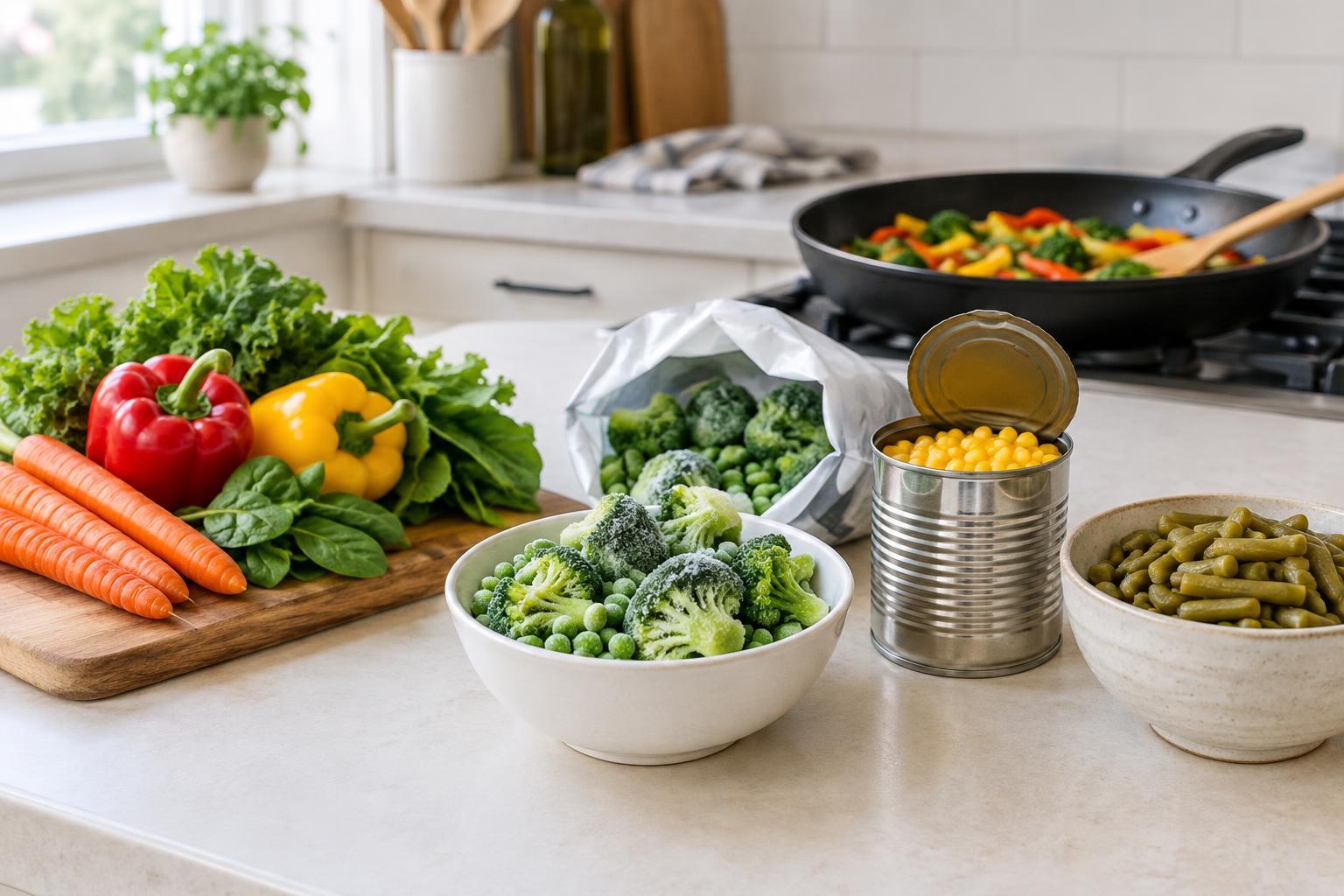
Choose for the dish, not by a fixed ranking
The best vegetable to buy is often the one you will actually cook. Fresh, frozen and canned options differ most in texture, preparation time and storage life. A crisp salad needs something different from a blended soup, while a Tuesday-night pasta may simply need vegetables you can add without another shopping trip.
Keep a small mix rather than choosing one format for everything. Fresh vegetables can provide crunch and delicate flavors. Frozen vegetables are ready to cook in convenient portions. Canned vegetables can turn pantry ingredients into a meal when the fridge is bare. All three can help you put together a satisfying plate; the useful question is what each one does well in your kitchen.
Use fresh when texture is the point
Choose fresh vegetables for raw dishes and preparations where a firm bite matters: cucumber in a sandwich, shredded cabbage in slaw, carrots with a dip or greens in a salad. Fresh is also a good choice when you want to roast larger pieces, such as cauliflower florets or wedges of squash, and control how browned or tender they become.
Plan fresh purchases around the meals you are likely to make soon. If you buy a bunch of spinach for a salad, give the remainder another job, such as folding it into scrambled eggs or a pot of beans. For a small household, one versatile vegetable may be more useful than several different kinds that will compete for space in the crisper.
Fresh does not automatically mean less expensive. Compare the price with how much you can use, including stems, peels and any portion likely to spoil. Before buying a large bag because it looks like a bargain, decide whether you can cook it, share it or store it while it is still in good condition.
Use frozen for dependable weeknight cooking
Frozen vegetables are particularly handy when a recipe calls for a handful rather than a whole bunch. Add peas directly to simmering pasta near the end of cooking, stir frozen spinach into soup or use mixed vegetables to fill out fried rice. Because they are already washed and cut, they remove a few small tasks that can make cooking feel harder after a long day.
For better texture, match the cooking method to the vegetable. Cook broccoli or green beans just until hot and tender rather than leaving them to simmer indefinitely. For a skillet meal, let excess moisture evaporate before adding a sauce; a crowded pan can steam vegetables that you hoped to brown. Frozen spinach often releases plenty of water, so squeeze or cook off the excess before adding it to a filling or creamy dish.
Frozen vegetables may be less appealing in a raw salad, where thawing changes their bite. They are at their best in cooked dishes, especially soups, curries, grain bowls and casseroles. Choose plain vegetables when you want control over seasoning, or check the label if you are buying a sauced blend.
Use canned for fast, pantry-friendly meals
Canned vegetables are useful when you want something ready to warm or mix into an already moist dish. Canned tomatoes make a base for sauce, soup or a quick skillet of chickpeas and vegetables. Corn can go into tacos or a rice bowl, while green beans can be warmed with garlic and a little oil for a low-effort side. Their softer texture is often an advantage in stews but may not suit a dish built around crispness.
Check whether a can contains added salt or sauce so you know how to season the finished meal. If you prefer less salt, look for an option with no added salt or drain and rinse vegetables when that makes sense for the recipe. Drain canned corn before adding it to a hot pan; keep the liquid from canned tomatoes when you want it to help form a sauce.
Cans can be economical, but compare them by the amount of vegetable you will serve, not just the price on the shelf. Once opened, transfer leftovers to a covered container, refrigerate them and use them promptly according to the package guidance. A half can left unused is not much of a convenience.
Build a small, flexible vegetable routine
A practical starting point is one fresh vegetable for crunch, one frozen favorite for cooked meals and one or two cans for backup. For example, keep carrots, frozen peas and canned tomatoes on hand. Carrots can go into a raw lunch or a soup; peas can brighten pasta; tomatoes can become a simple sauce. The combination offers several meals without requiring a crowded fridge.
When planning dinner, choose the vegetable after deciding how much time and attention you have. On a night when you want to chop and roast, use fresh. When you need a quick addition to a hot pan, reach for frozen. When dinner is mostly coming from the pantry, open a can. Rotating among the three lets you cook with what you have instead of letting an ideal shopping list stand between you and dinner.