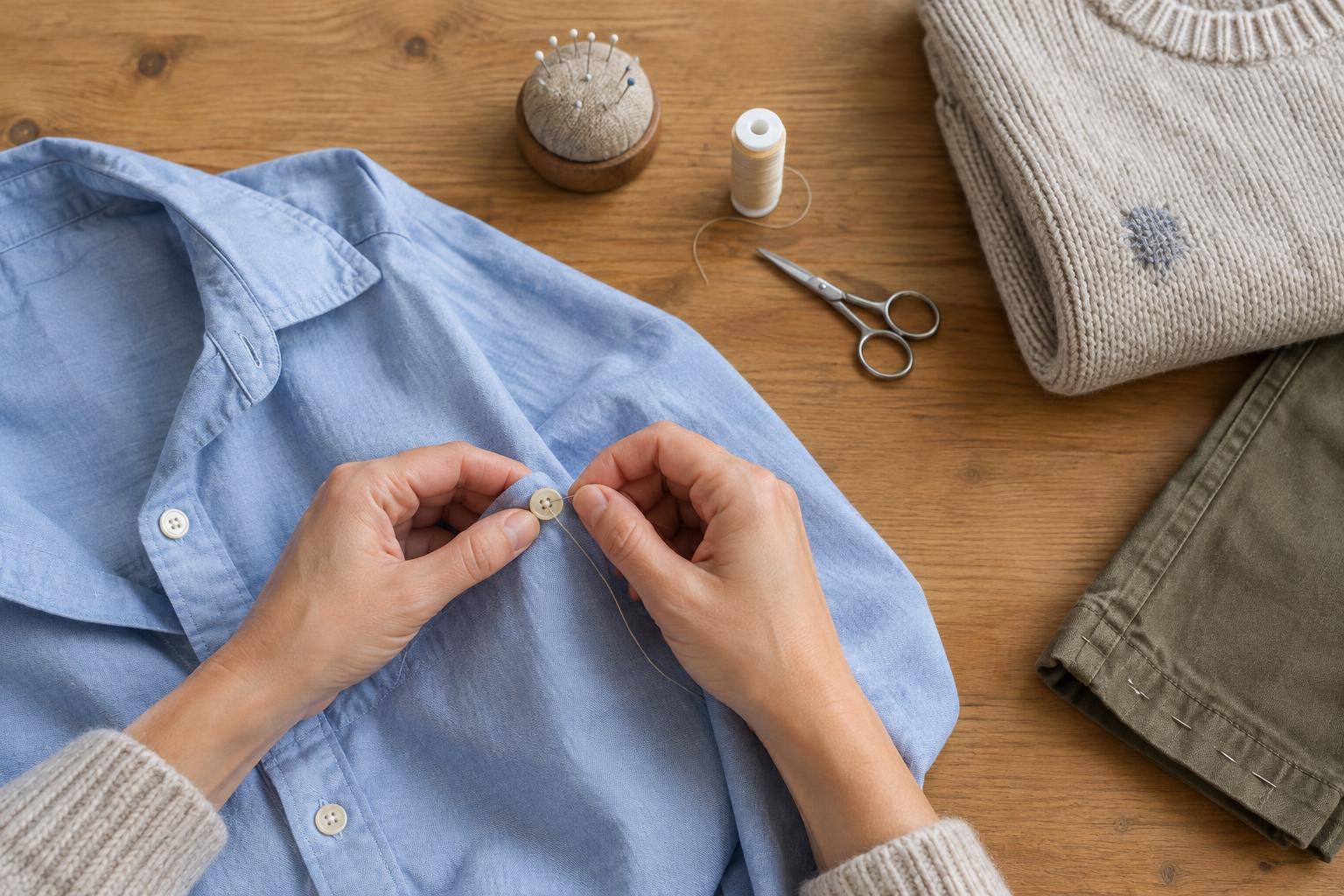
1. Sew a loose button back on
A small hand-sewing kit can cover many everyday fixes: a few needles, thread in colors you often wear, small scissors and a handful of pins. Work in good light, and choose thread that matches the garment when you can. For most repairs, cut a manageable length of thread, knot one end and secure the other end with a few small stitches rather than relying on a large knot that might pull through the fabric.
If a button is still attached but wobbly, remove the old loose threads first. Mark its position by checking the buttonhole or a matching button elsewhere on the garment. Starting from the inside, pass the needle through the fabric and a buttonhole several times, then repeat with the remaining holes. Leave a little space beneath a coat or shirt button so the fabric can fit comfortably when fastened. Before tying off, wind the thread a few times around the stitches under the button to form a short shank. Finish with a knot on the inside.
2. Close a split seam
A seam that has opened while the surrounding fabric remains intact is one of the most forgiving repairs. Turn the garment inside out and line up the original folded edges. If the gap runs down a side seam, pin the edges together so they do not shift. Begin stitching a little before the opening and finish a little beyond it, anchoring your new stitches in the sound part of the seam.
A backstitch makes a sturdy hand-sewn line: bring the needle up through the fabric, take a small stitch backward, then bring the needle up a similar distance ahead. Repeat along the original seam line. Keep the stitches even and snug, but do not pull so hard that the fabric puckers. Knot the thread securely on the inside and turn the garment right side out to check how the repair sits. If the fabric itself has torn beside the seam, it may need a patch rather than stitches alone.
3. Reattach a fallen hem
A drooping trouser or skirt hem is easier to fix when you can still see the old fold. Turn the garment inside out, press the fold gently if the care label allows, and pin it in place. Check the hem against the other leg or an undamaged section before sewing; a straight-looking fold on the table can hang unevenly when worn.
For a hem that you want to keep discreet, use small slip stitches. Pick up only one or two threads of the outer fabric, then pass the needle through a short section of the folded hem allowance. Move along the hem, keeping the thread relaxed enough for the garment to hang naturally. Every few stitches, look at the right side to make sure the thread is barely visible and the fabric is not dimpled. Tie off inside the hem. On casual clothes where visible stitching is already part of the design, simple small running stitches may be a better match.
4. Mend a small hole in a knit
A small hole in a T-shirt or sweater deserves attention before it grows. Turn the garment inside out and identify any loose loops around the opening. Use a matching thread and a fine needle suitable for the fabric. Starting just outside the hole, take tiny stitches through the nearby loops, working around the opening rather than pulling one long stitch across it.
Draw the edges together gradually and stop as soon as they meet. Pulling tightly can create a noticeable pucker, especially on a lightweight T-shirt. Secure the thread on the inside with a few small stitches. This works best for a small opening where the fabric is still present; a larger worn-through area may need a patch, darning or a different repair. If the knit is delicate or the damage is in a prominent spot, test your stitches slowly so you can adjust before committing to the whole repair.
5. Fix a torn pocket lining
A hole in a pocket can make keys and coins disappear into the garment, even when the outside looks fine. Pull the pocket bag out if possible and empty it completely. If its edge seam has simply come apart, align the edges and sew along the original stitch line with small backstitches. Start and end beyond the gap, then check that the pocket still opens fully.
If the pocket fabric has torn away from the seam, fold the raw edges inward and use small whip stitches to join them, passing the needle through both folded edges. Keep the new seam narrow so it does not noticeably shrink the pocket. For thin, badly worn fabric, a scrap of sturdy cotton placed behind the tear can provide support: stitch around the patch’s edges and then close the opening. Put your hand into the pocket before finishing to check for gaps. None of these fixes needs to be perfect to be useful; a secure, comfortable repair can keep a favorite garment in rotation.