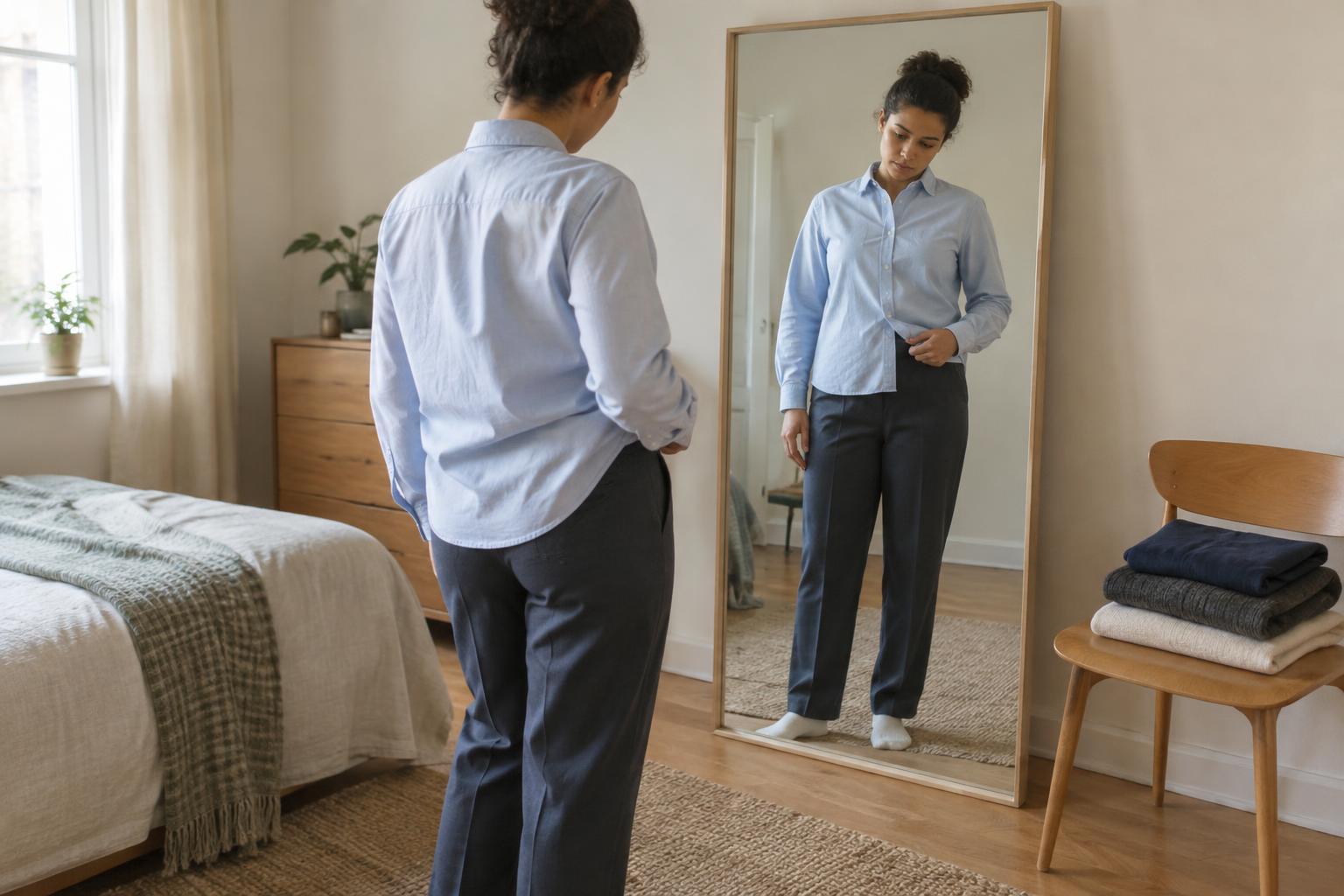
Start with a useful mirror check
A garment can look fine on a hanger and feel wrong the moment you wear it. Fit is not about making your body match a standard shape; it is about finding clothes that sit comfortably, move with you and create the look you want. Before deciding that something is too big or too small, put it on with the shoes and underlayers you would normally wear. Stand naturally rather than holding your shoulders back or pulling in your waist.
Look at the front, sides and back if you can. A full-length mirror helps, but a phone photo on a timer can show angles you cannot easily see. Then sit, reach forward and take a few steps. Fabric that lies smoothly when you stand still may pull or shift during an ordinary day. Pay attention to how the garment feels as well as how it looks: if you keep adjusting it, that is useful fit information.
Mistake 1: Mistaking pulling for a fitted look
A close fit can be intentional, but strain usually leaves clues. On a shirt or jacket, look for gaps between buttons, diagonal lines radiating from the chest or hips, or a hem that rides up when you move. On trousers or a skirt, check for horizontal creases across the hips and fabric pulling around pockets or closures. Those signs suggest the garment needs more room in that area, even if the label shows your usual size.
Try the next size up and compare the overall shape. Sizing up may solve the strain, or it may make the shoulders and waist too loose; either result tells you something about the cut. If one area fits well and another does not, a different style may be easier to wear than an alteration. For example, a straight-cut shirt might work better than a sharply tailored one if the buttons pull but the shoulders already fit.
Mistake 2: Assuming extra fabric is always comfortable
Roominess can be part of a great outfit. Unplanned bunching, though, can make clothing feel awkward without adding useful comfort. Check whether shoulder seams fall far beyond your shoulders on a garment that is not meant to be oversized, whether a waistband slips as you walk, or whether fabric pools heavily at the ankles. Turn sideways to see if a top balloons away from your body or gathers under a jacket.
The fix depends on where the extra fabric sits. A belt can change the shape of a loose shirt or dress, but it will not correct a jacket whose shoulders are much too wide. Trousers that fit through the seat and thighs but are long may need only a hem. Before paying for alterations, try the garment on with the layers you expect to wear; a slightly roomy sweater may be exactly right over a shirt.
Mistake 3: Overlooking where seams and hems land
Even when a garment is the right general size, its proportions can change how it looks and feels. On a conventional fitted shirt or jacket, the shoulder seam usually sits near the edge of your shoulder. If it sits high toward your neck, movement may feel restricted; if it hangs well down your arm, the sleeves may twist or the upper body may look slouchier than you intended. Intentional drop-shoulder designs are an exception, so judge the result rather than following a rigid rule.
Hems deserve the same attention. A sleeve that covers your hand, a trouser leg that catches under your shoe, or a skirt hem that lands at an uncomfortable point when you sit may affect how often you wear the piece. Test different shoes and, where appropriate, try a temporary cuff to preview a shorter length. Simple hems are often easier to change than shoulders, armholes or the overall cut.
Mistake 4: Judging fit only while standing still
The mirror is most useful when you treat it as a movement check, not a verdict on a single pose. Raise your arms in a jacket, sit in trousers and walk across the room in a skirt or dress. Notice whether a neckline shifts, a waistband rolls, or a shirt needs to be tucked back in. A garment does not have to stay perfectly motionless, but it should work for the activities you bought it for.
When you find a problem, name it specifically before buying a replacement: “the waist slips,” “the sleeves are long,” or “the buttons pull when I sit.” That makes your next fitting-room visit more focused. Keep the pieces that feel good in motion as reference points, and compare their measurements or cut with new options. A good fit is less about finding a perfect size on a tag than finding clothes you can wear without thinking about them all day.