Start with one place for incoming paper
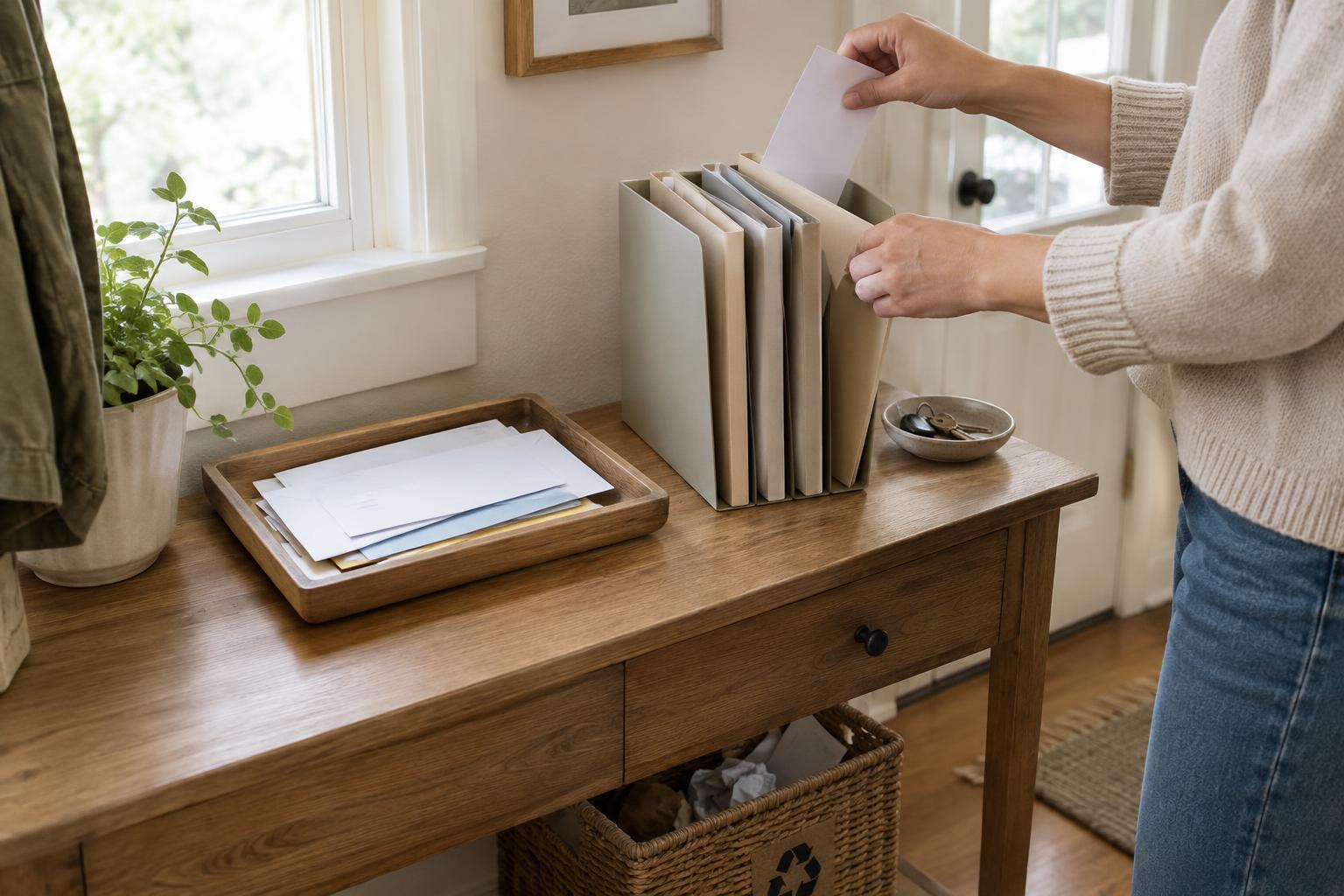
Paper clutter often spreads because it has no agreed-upon destination. A letter lands on the kitchen counter, a receipt stays in a coat pocket, and a form gets tucked beside the laptop. In a small home, even a few stray sheets can make a room feel busy. The first step is not to buy more storage. It is to choose one landing spot that everyone in the household can reach.
A shallow tray, wall pocket or upright magazine holder can work. Put it near the door or wherever you usually open mail, but keep it small enough that it cannot become permanent storage. If you share your home, agree that incoming paper goes there rather than on the table. Recycle obvious junk mail and empty envelopes as you open them, then place anything that needs a closer look in the landing spot.
Sort into four useful categories
You can manage most everyday paper with four destinations: act, keep handy, archive and discard. The act category is for items with a next step, such as a form to sign or a bill to review. Keep handy is for information you expect to use soon, such as a class schedule or appliance instructions. Archive is for records you have decided to retain but rarely need. Discard is for paper that no longer serves a purpose.
Use whatever containers fit your space. A slim folder labeled “To Do” can hold action items; a second folder can hold handy reference pages. Archived papers might live in one portable file box on a closet shelf. You do not need a separate folder for every type of document at first. Broad labels such as “Home,” “Vehicle” and “Personal” are easier to maintain than an elaborate system you will avoid using.
Be thoughtful about what you discard. Some records may be important for taxes, warranties, insurance or other obligations, and how long to keep them depends on your circumstances. If you are unsure about a particular document, set it aside to check rather than guessing. Shred or securely destroy papers that contain account numbers or other sensitive personal details.
Make the action folder earn its space
The “To Do” folder is the heart of the system because it prevents unfinished tasks from disappearing into storage. Give each paper a clear next step. You might write a brief note on a sticky tab: “return Tuesday,” “compare with statement” or “ask landlord.” If a task has a deadline, put the date in a calendar you already use. A folder is a place to find the paper, not a reliable reminder on its own.
Try to keep this folder thin. During a weekly check, deal with tasks that take only a few minutes, and decide when you will handle the rest. Once an item is complete, move it to the archive only if you need the record. Otherwise, let it go. This keeps your small paper station from turning into a holding area for completed work.
Handle the papers that do not fit neatly
Sentimental papers deserve a separate, limited home. Choose a box or folder for cards, children’s artwork and other pieces you enjoy revisiting. When it fills, look through it and keep the items that still feel meaningful. You can photograph a bulky project before letting it go, but there is no need to digitize everything you value.
Receipts can be sorted by purpose rather than saved in one growing pile. Keep those tied to a return, warranty or record you need, and discard the rest when you are confident they are no longer useful. If digital copies work for you, store scans or photos in clearly named folders and make sure they are backed up. Check that an image is readable before getting rid of the original, and keep physical originals when they are required or would be difficult to replace.
Reset the system in ten minutes a week
Pick a repeatable time, such as after opening the weekend mail, to empty the landing spot. Recycle what you can, move new tasks into the action folder, file what you need to keep and clear out anything that has expired. A short, regular reset is easier than waiting until paper covers a surface.
If the system starts overflowing, treat that as useful feedback. The landing spot may be too far from where paper enters, a folder label may be unclear, or the archive may need a quick review. Change one part rather than starting over. The goal is not a perfectly paperless home; it is a small, dependable path from the front door to the right destination.