Make the first trip easy to manage
For a first overnight trip, choose an established campground within a comfortable drive of home. Look for a site where you can park nearby, especially if you are borrowing gear and do not yet know how much you can carry. A campground with toilets and drinking water removes two common complications. Before booking, check what the site actually includes: a picnic table, a place for a tent, water access and permission to cook are not guaranteed everywhere.
Pick a night when you can arrive well before dark and leave without rushing the next morning. Check the forecast close to departure, including overnight temperatures rather than only the daytime high. If conditions look beyond what your clothing and shelter can handle, changing the plan is reasonable. Keep the goal modest: sleep outdoors, make a meal and enjoy a short walk. You do not need to fill every hour.
Borrow before you buy
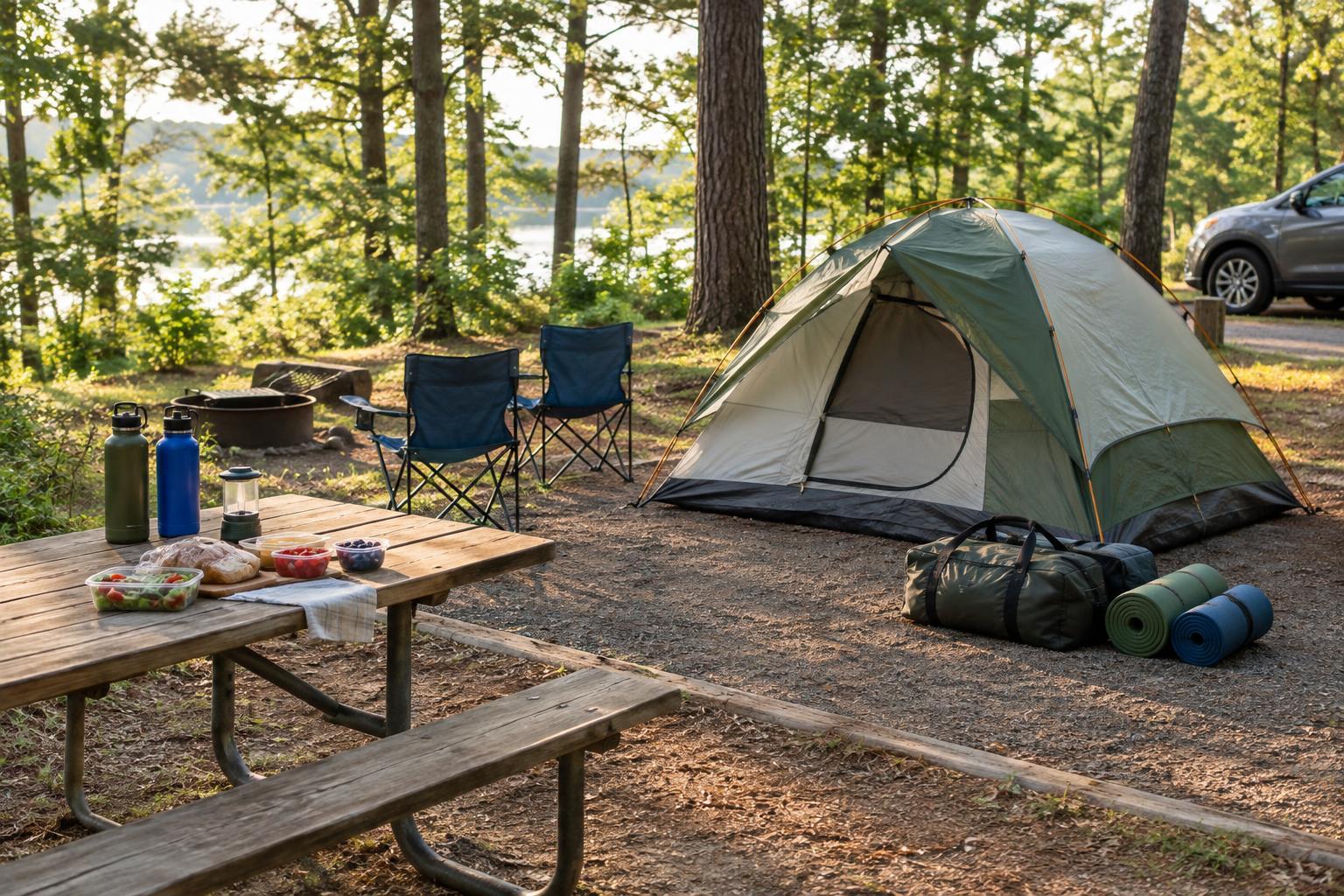
The essentials are shelter, a way to sleep comfortably, suitable clothing, light, food, water and a means of preparing food that is permitted at your site. Ask friends whether you can borrow a tent, sleeping bag or camp stove. If renting is available locally, compare its cost with buying equipment you might use only once. Whatever you borrow, practice setting up the tent at home and check that its poles, stakes and rain cover are present.
For sleeping, pay as much attention to what goes under you as what goes over you. A sleeping pad cushions the ground and helps separate you from its cold surface. Choose a sleeping bag or bedding appropriate for the expected overnight temperature, and bring an extra warm layer. Pack a headlamp or flashlight with working batteries, a phone charging option, toilet paper where appropriate, and a bag for rubbish. A written checklist is more useful than trying to remember everything at the door.
Plan food that asks little of you
One night calls for a simple menu. You might bring sandwiches and fruit for arrival, then make a one-pot dinner such as pasta with jarred sauce. For breakfast, try oatmeal, bananas and a hot drink. Ready-to-eat meals are a sensible choice if you would rather spend your first evening learning your campsite than learning a stove. Check campground rules before relying on a campfire; restrictions may apply, and firewood may need to be obtained locally.
Pack enough drinking water unless you have confirmed that potable water is available on site. Keep perishable foods chilled, and bring a few easy snacks for the drive and the next morning. Store food and scented items according to the campground’s instructions rather than leaving them in your tent. Wildlife precautions differ by location, so read the guidance for the specific place you are visiting.
Give your arrival a simple order
When you reach the campground, find your designated site and take a moment to notice the slope, nearby paths and where water might collect if it rains. Set up the tent while you have daylight, then lay out your sleeping gear and locate your light. Keep the cooking area separate from the tent and follow any site-specific rules. Once the basics are done, you can take that short walk or sit down without wondering what still needs to happen.
Bring small comforts that earn their space: a warm hat, dry socks, a compact chair if you have one, or a book for a quiet evening. Put tomorrow’s clothes somewhere easy to find. Before bed, secure food and rubbish as directed by the campground, and make sure everyone knows where the toilets are. If you are camping alone, let someone you trust know where you are going and when you expect to return.
Leave time to pack up well
In the morning, make breakfast before dismantling the entire site. Shake dirt from your gear, check the ground for small items such as stakes and food wrappers, and take your rubbish to the designated disposal point or home with you. If the tent is damp, unpack and dry it when you return so it is ready for another trip.
Notice what you used, what stayed in the bag and what you wished you had brought. That short review can shape a better checklist for next time and help you avoid unnecessary purchases. A successful first trip is not one in which everything goes perfectly; it is one that gives you a comfortable, repeatable way to spend a night outside.