Start with your actual week
A mix-and-match wardrobe is a collection of clothes that work together and suit the life you lead. It does not require a particular number of pieces, a neutral-only color scheme or a complete reset. The useful question is simpler: can you get dressed for an ordinary week without repeatedly searching for the one thing that goes with everything?
Before sorting your closet, jot down what you dress for most often: work, errands, time at home, social plans and any activities with specific clothing needs. Then notice what you choose for each. If you work from home and walk most places, comfortable trousers and dependable shoes may matter more than another formal outfit. Keep special-occasion clothes in view, but do not let occasions that happen rarely determine most of your wardrobe.
Find your reliable pieces
Pull out the clothes you wore recently and felt comfortable in. Look for patterns: perhaps you like relaxed shirts, straight-leg trousers or layers you can remove indoors. These pieces are your starting point. Set aside anything that does not fit, needs repair or feels difficult to wear, but do not discard it in a rush. A small repair or a different pairing might make it useful again.
Next, try making outfits with what you have. Put a favorite bottom beside several tops, then add a layer and shoes. If a shirt works only with one pair of trousers, that is not necessarily a problem; you may love the outfit. But if many items depend on a missing piece, note the gap. Taking quick photos of combinations you like can give you a ready reference on busy mornings.
Choose connections, not a uniform
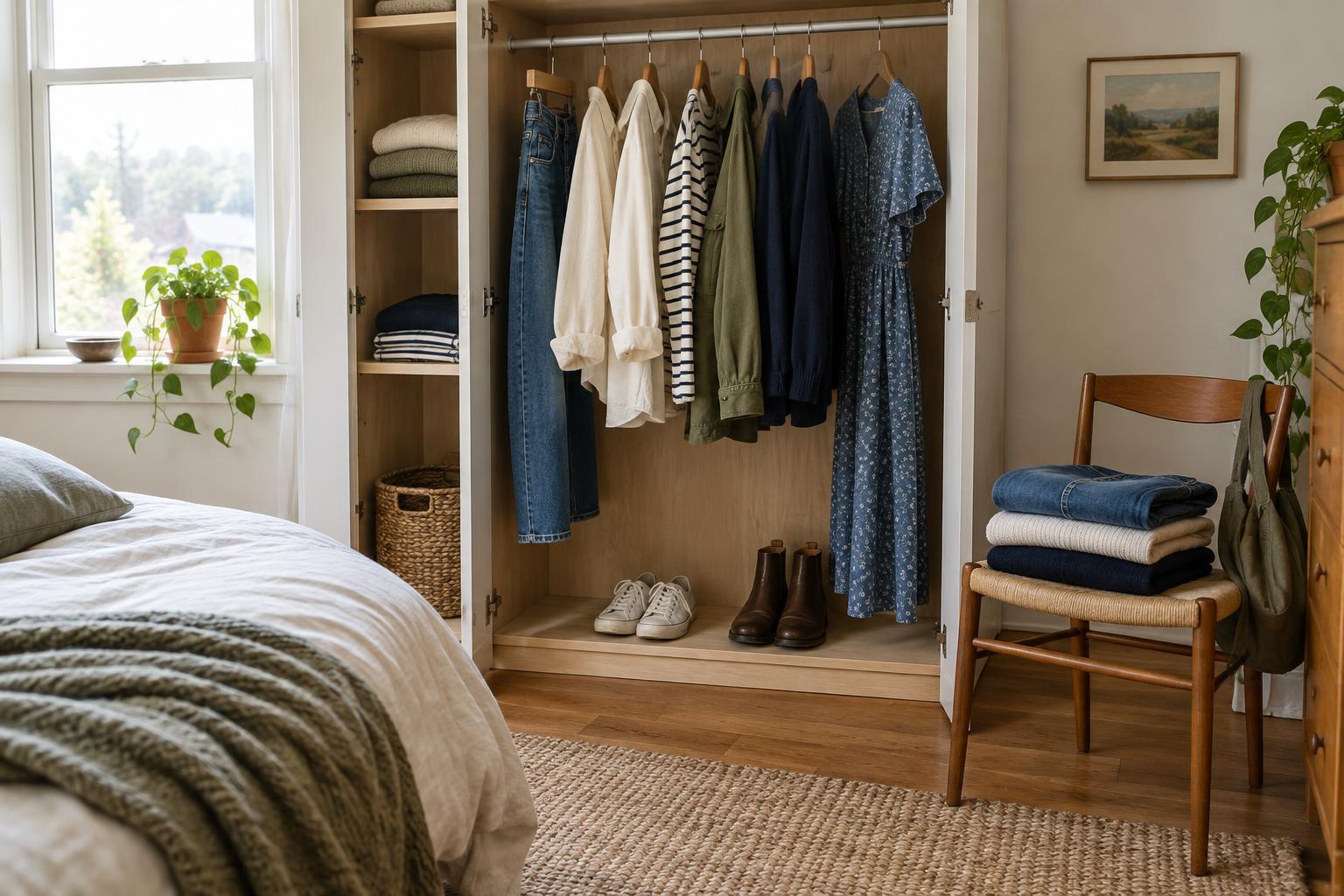
A loose color plan makes mixing easier. Pick two or three colors already common in your closet for frequently worn items such as bottoms, outer layers and shoes. Then use other colors or prints wherever you enjoy them. For example, navy trousers, blue jeans and a cream cardigan might work with a striped top, a rust-colored shirt or a patterned scarf. The aim is not to make every item match every other item; it is to create several combinations you would want to wear.
Shape and formality matter as much as color. A top may match your trousers perfectly but still feel wrong with them if both are unusually bulky or suited to different occasions. Try pieces on together rather than judging them on hangers. As a practical test, see whether a potential purchase works with at least two outfits you can make now. That test helps prevent buying a useful-looking item that requires several more purchases before you can wear it.
Fill gaps slowly and on purpose
Make a short list of what would solve a recurring problem. Be specific: “a washable layer for cool mornings that works over three tops” is more helpful than “more basics.” Check your budget and look at what you already own before shopping. Alterations, repairs and secondhand finds may be options, depending on the item and what is available to you.
When you do shop, consider comfort, care and frequency of wear alongside price. A low-cost garment is less useful if it is uncomfortable or needs care you cannot easily provide. Check how it feels sitting and moving, whether it works with your usual shoes, and whether you are willing to wash it as directed. You do not need to buy every gap at once. Living with a short list for a few weeks can reveal which missing pieces truly matter.
Keep the system easy to use
Give your most-worn clothes the easiest-to-reach space. If storage is tight, move clearly out-of-season items elsewhere while keeping a few flexible layers available for changing weather. Leave enough room to see what you own; a crowded rail can make a small wardrobe feel larger and less useful than it is.
Finally, revisit your wardrobe when your routine changes, not according to a rigid schedule. Laundry frequency, weather and personal preferences all affect how many pieces are enough. If you regularly run out of clean tops, you may need more tops, a different laundry routine or both. A successful small wardrobe is not the smallest possible one. It is one that makes everyday choices easier while still leaving room for your personal style.